
Vinarium · native iOS
I built Vinarium because I kept finding bottles in my cellar too late, past their peak. Now every bottle is scanned, located, valued, and opened at the right moment.


The magic trick
You photograph the label. Claude reads it and fills the producer, the appellation, the vintage and the grapes; Gemini searches the web and estimates the price. You correct one field maybe, you save. Ten seconds. That is why the cellar stays up to date.
The scan on the right is real: a Grange des Pères 2016, read from one photo.
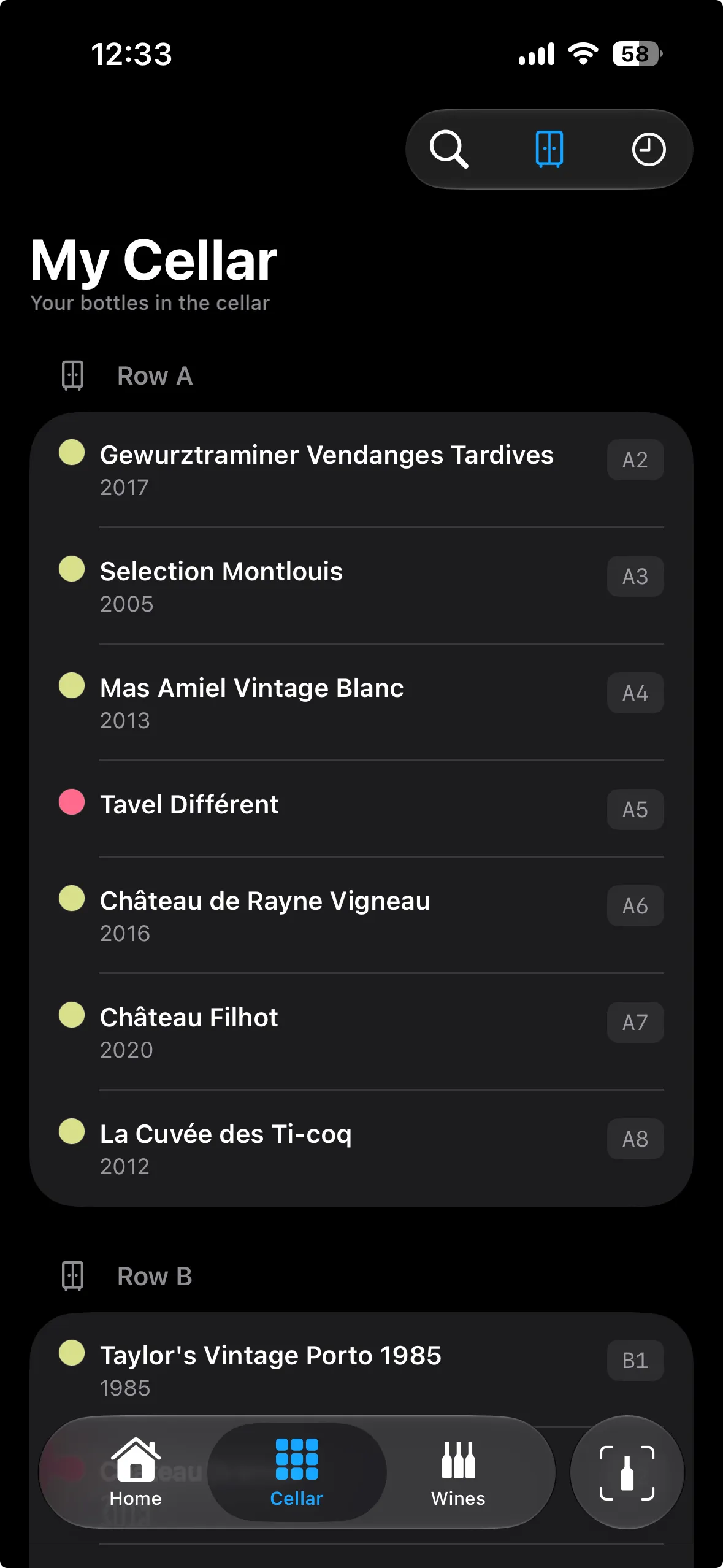
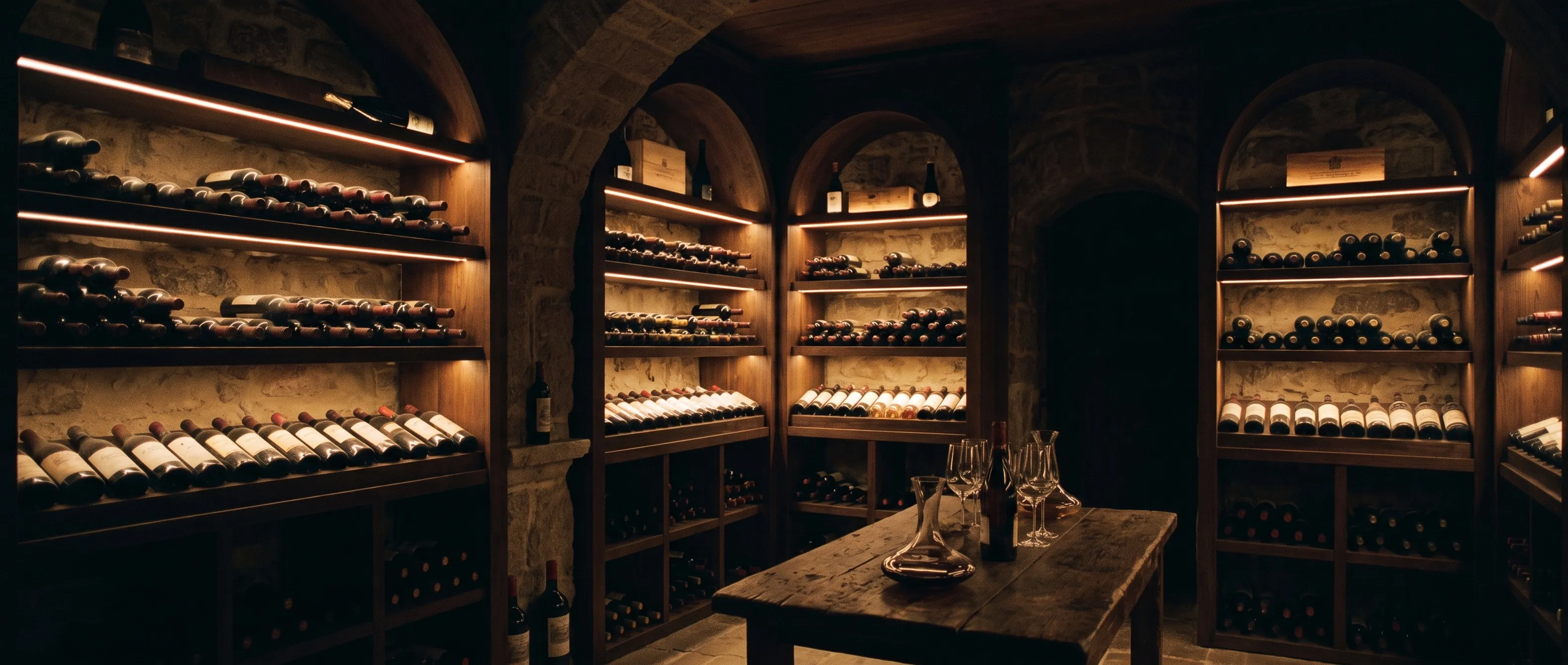
Row A, column 4. The app mirrors my real cellar, bottle by bottle, so I take the right one without moving ten others to check the labels.
Total value, what is in stock, what needs attention. When a wine enters its drink window, the app tells me. Today it says 10 bottles and 1 263 €.
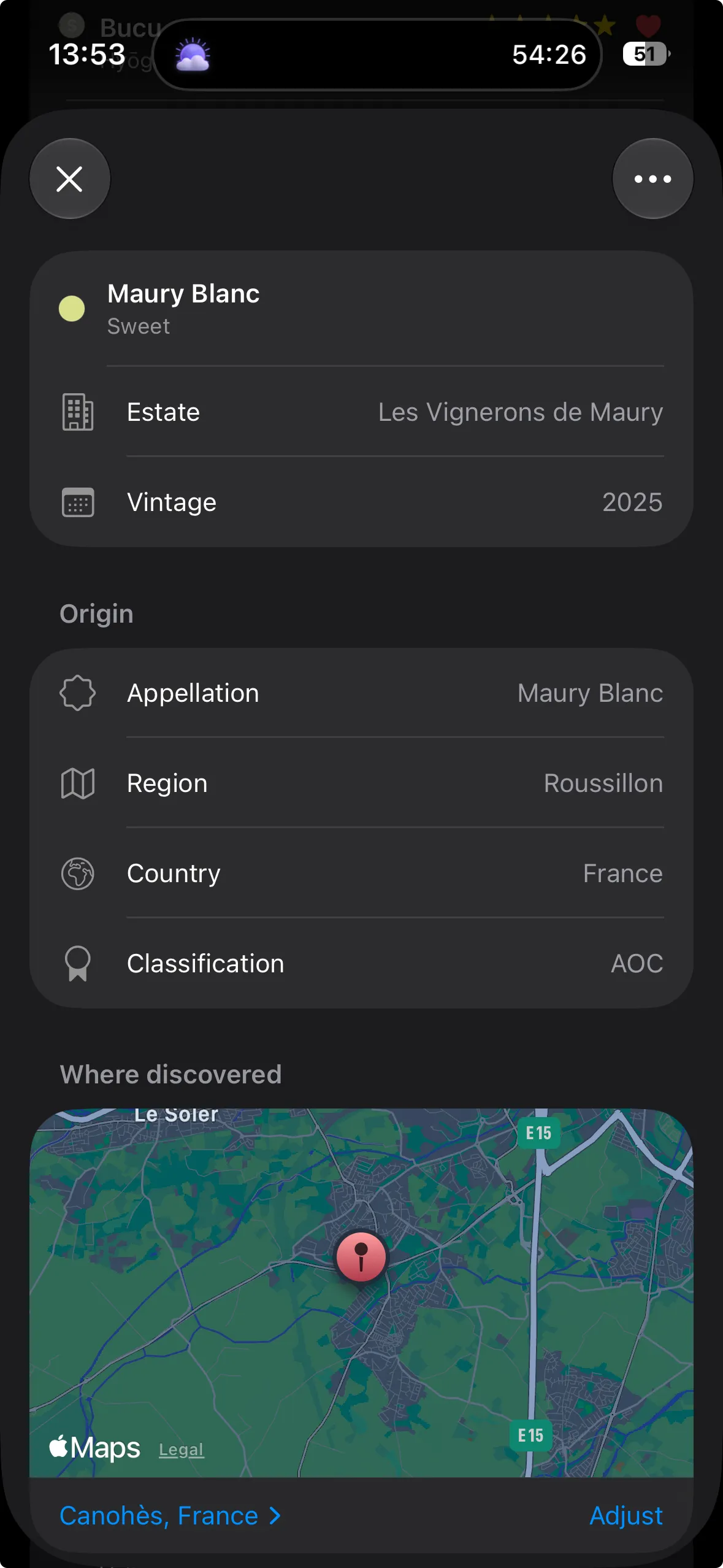
Grapes, appellations, classifications, purchase price, tasting notes. The kind of details you promise to remember about a bottle, and never do.
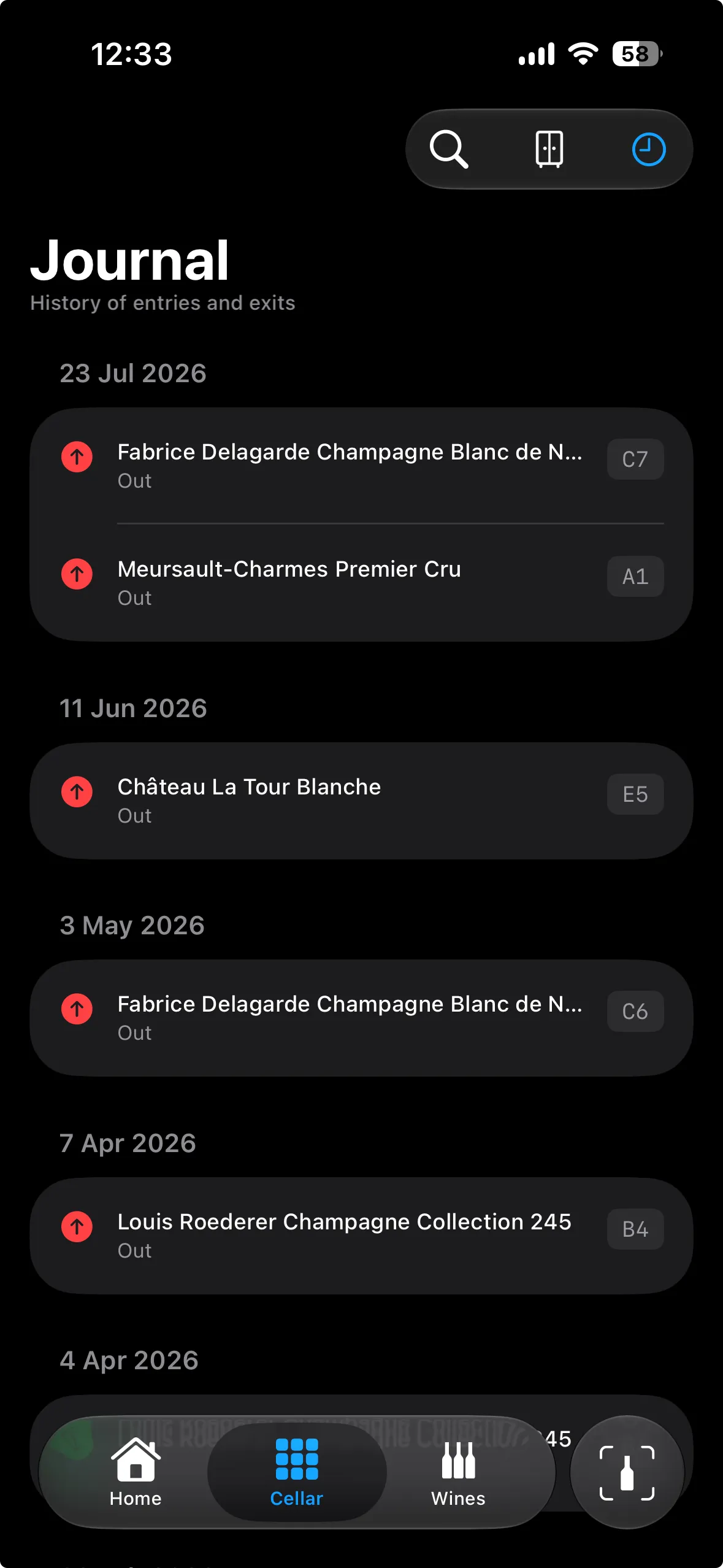
Every bottle that comes in or goes out, with the date and a note. Ask me what we opened at Christmas two years ago: I can tell you.
And everything else
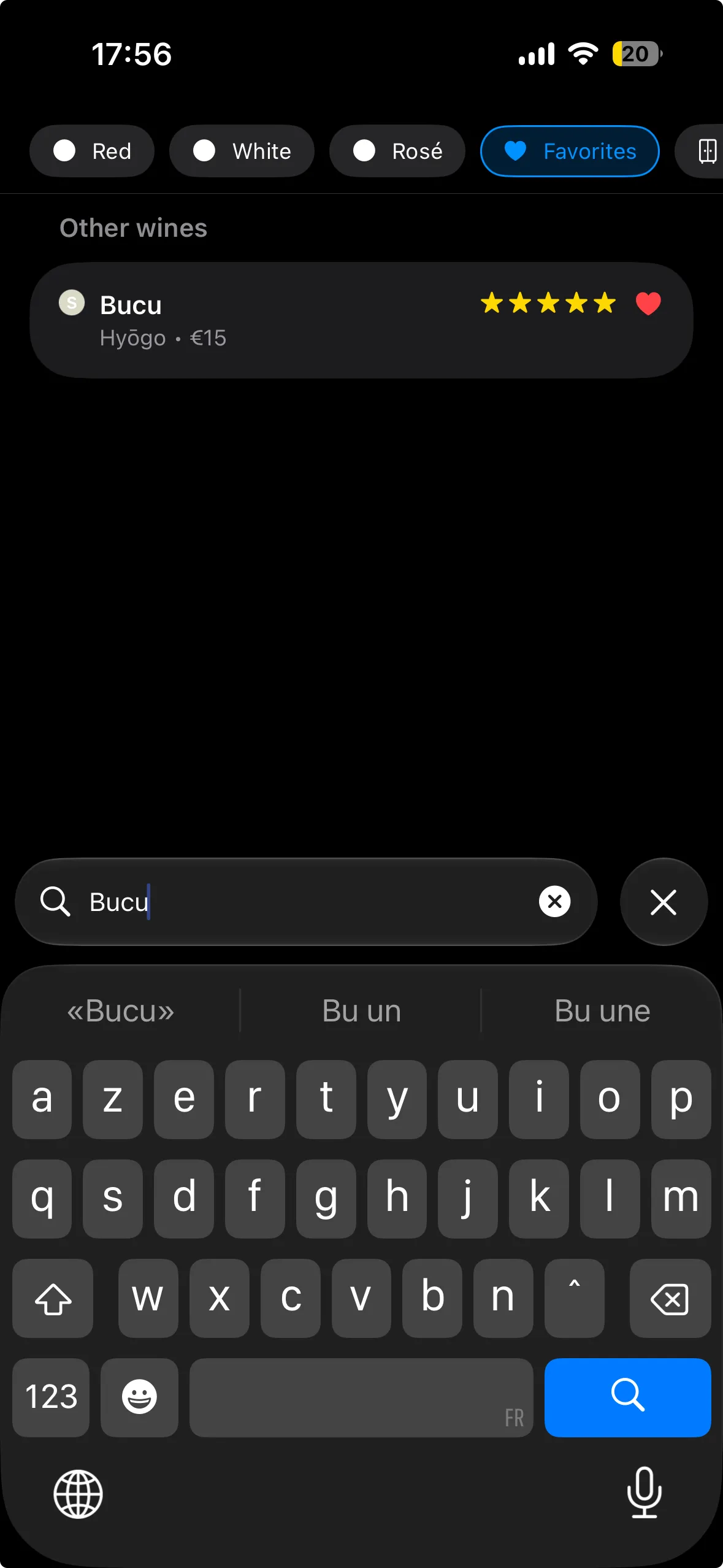
One search across names, producers, regions, vintages, even people. Ranked by relevance, refined with combinable filters.
Every wine carries its window, and the dashboard shows what is ready. "Before 2027" is not something I have to remember anymore.
Bottles received and bottles offered, with who and when. Never offer a wine back to the person who gave it to you.
Port, rum, sake, beer. Anything worth keeping gets proper structured fields, with the same care as a grand cru.
Notes and ratings on every bottle opened. A searchable history of what I really liked, not what I think I liked.
Full JSON export and import, Sign in with Apple, per-user isolation in Firestore. If one day I want to leave my own app, there is a door.
The app is in French because I built it for myself, and I am French. The screenshots are the real app.
The craft
Same method as everything I ship: domain-driven design with strict CQRS, business rules as pure functions (all of them tested), and a GraphQL schema typed end-to-end from Firestore to SwiftUI. The whole GCP infrastructure starts with a single Terraform command. Architecture and reviews by me, code written by Claude under close supervision.